 Leslie's
page May 2023
Leslie's
page May 2023
 Welcome
to the personal page of Leslie.
Welcome
to the personal page of Leslie.
I live
in the far southeastern corner of the world, in
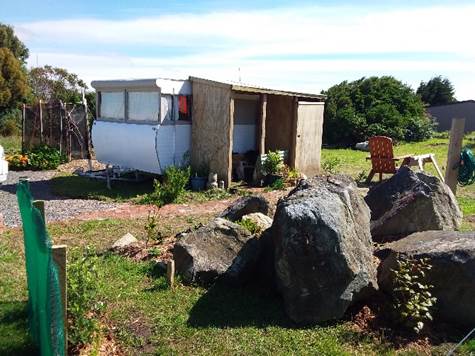
Aotearoa, as far as you can get before reaching Antarctica. I live on a bit of
semi urban land in a caravan, in a town of a few thousand people, at the very
beginning or the very end of state highway one. The town is on a peninsula,
nestled in the shelter of a stout hill, a shallow harbour and port on one side
and the great Southern Ocean on the other. Motopōhue,
the island of the climbing clematis, is usually known as Bluff these days,
although 200 years ago it was briefly called Cambelltown.
Motupōhue was known as an island, as the thin
long isthmus was once a rugged impassable tangle of rain-forested hills and
swamp, and Motupōhue was accessible only by
boat. The hill is one of the highest points over the Plains of Murihiku, (or Southland) and sitting just off the coast, an
easily found landmark for many kilometres around. It was always special, and
thought of as sacred, blessed, symbolically drapped
with a protective korowai of the rangitira, and in
reality, with a mantle of lush, diverse forest, raucous with bird song,
glistening with kamahi and clematis flower and sculpted by the torrential rains
and howling winds of the south into a unique maze of beaten rocks and ancient gnarled
trees, rich with caves and burrows and gulley’s and sheltered groves,
harbouring the feathered and scaled residents.
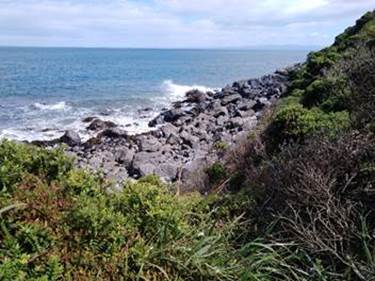 The
hill rises to a peak of around 265m above the sea, a citadel of granite and
green. With a sea moat of stony cliffs and rumbling rocky beaches on the south
side, battered by the exploding southern swells constantly combing and rinsing
giant kelp forests. And on the north side, the harbour, tidal flats reclaiming
derelict hulks and industrial ruins sit sulking over changing fortunes.
The
hill rises to a peak of around 265m above the sea, a citadel of granite and
green. With a sea moat of stony cliffs and rumbling rocky beaches on the south
side, battered by the exploding southern swells constantly combing and rinsing
giant kelp forests. And on the north side, the harbour, tidal flats reclaiming
derelict hulks and industrial ruins sit sulking over changing fortunes.
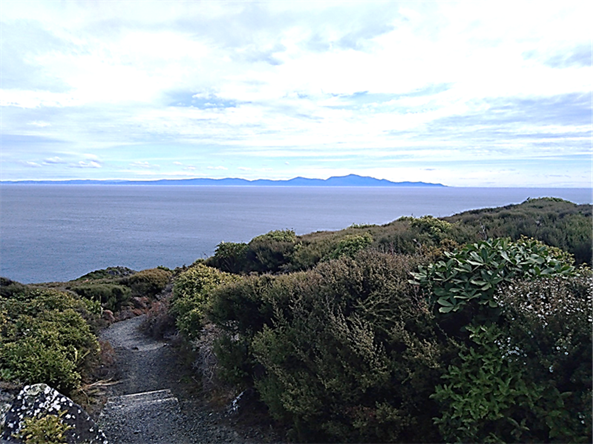 Beyond
Foveaux Strait, to the south, lies another special place, tied forever in
legend to this attached outcrop. Rakiura, New
Zealand’s third star, or Stewart Island, the place of the blushing skies, lies
on the horizon, stretched out long and ragged, and demanding attention. Its highest peak, Hananui,
(or Mt Anglem) drawing eyes. Other islands lie
scattered through the driven, showery reaches of the strait, misty and
displaced, the Titi Islands, the islands of the mutton birds. From the peak of Motupōhue you can catch glimpses of long white beaches
on the fragmented coasts all around, make out the hills to the east, of the
Catlins, to the west the hills of Riverton, Orepuki
and the Longwoods. Inland, to the northwest, the snowy Takitimu
mountains, the legendary upturned hull of the great waka that carried so many
far across the Pacific and around the shores of Aotearoa. Further away west are
the mysterious, craggy, and almost impenetrable mountain ranges and forests of
Fiordland, wrapping around the deep fiords, in an impossible convoluted embrace
of heaven and earth and ocean. To the north, past the Green Hills of the
isthmus, and glimpses of Invercargill’s New River estuary, are the Hokonui hills and the distant ranges of Central Otago,
burnt
Beyond
Foveaux Strait, to the south, lies another special place, tied forever in
legend to this attached outcrop. Rakiura, New
Zealand’s third star, or Stewart Island, the place of the blushing skies, lies
on the horizon, stretched out long and ragged, and demanding attention. Its highest peak, Hananui,
(or Mt Anglem) drawing eyes. Other islands lie
scattered through the driven, showery reaches of the strait, misty and
displaced, the Titi Islands, the islands of the mutton birds. From the peak of Motupōhue you can catch glimpses of long white beaches
on the fragmented coasts all around, make out the hills to the east, of the
Catlins, to the west the hills of Riverton, Orepuki
and the Longwoods. Inland, to the northwest, the snowy Takitimu
mountains, the legendary upturned hull of the great waka that carried so many
far across the Pacific and around the shores of Aotearoa. Further away west are
the mysterious, craggy, and almost impenetrable mountain ranges and forests of
Fiordland, wrapping around the deep fiords, in an impossible convoluted embrace
of heaven and earth and ocean. To the north, past the Green Hills of the
isthmus, and glimpses of Invercargill’s New River estuary, are the Hokonui hills and the distant ranges of Central Otago,
burnt 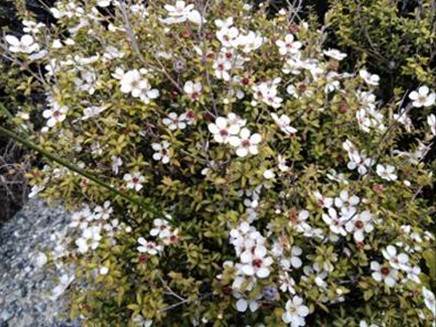 brown
or snowy white, depending on the season.
brown
or snowy white, depending on the season.
I love
this place, its open spaces, the wild sea, the sculptured land. The wind often
howls, screaming the pain of too much global heat to transport from equator to
pole, malicious and bolshy in its turbulent agony. Here, the rain has one of
the highest annual falls in the world, the hills milking the moisture of the
enormous Southern Ocean from the howling south-westerlies, the tears cleansing
and salving the scars left by the thoughtless two-legged featherless animals.
The terrain is green and breath-taking. It is nurturing and dynamic. Rich flows
of energy, chemical and kinetic, biological, and potential, ebb and flow
rigorously. Change is constant, irresistible, cyclic, sudden, and pointedly
exponential. Always wearily, lovingly mocking the crumbling piles of animal
efforts to assert an unnatural and hopeless perspective. Always mourning the
loss of millions of years of diversity and evolution and expression. Washing,
sorting, testing, preparing for another epoch of slow recovery, of life's
expanding expression once again.
Here
too, is one the remotest parts of the human world. Aotearoa was the latest
landmass to be discovered and inhabited by humans, around a thousand years ago.
This point is the latest terminus of the many trails of humanity around the
planet, the furthest, most remote point, and that is exactly what this rocky,
overgrown peninsula feels like. It stops here. Beyond, in view, is Rakiura, the anchorstone, our
mooring. But beyond that are the Sub-Antarctic islands, bearing the optimistic
signs and weathered degradations of steppingstone forays, and Antarctica
herself, inhospitable and challenging, locked in an ancient coma of recovery,
now thawing.
What?
I’m
only human in form and genetics, but inside I believe I must be something else.
The kinds of questions you might ask of someone to find out who and what they
are seem inapplicable and irrelevant to me: delusional fantasies, shadows of
the real world, just appendix appellations, left over from a now defunct
reality, whether they are applied to me or someone else. Things like names,
gender, occupation, country, language, home, livelihood, marital status, sexual
preferences, hobbies – all fairy stories, and old wives tales, irrelevant
stickers we cling onto to make some connected sense of ourselves and our
experience. But nevertheless, it might be useful to know that I’m known as
Leslie, I was born in 1963, in Hamilton New Zealand, and have been confused
ever since. I know a bit about mathematics, physics, coding and meteorology,
and like cats and gardening.
You can
find out more here.